

Endometriosis: Myths and Facts
Correcting common misconceptions with clear, evidence-based information – and clearly identified GEM clinical positions
1. MYTH: Severe period pain is normal
FACT: Severe period pain that disrupts school, work, sleep or daily activities deserves assessment. Endometriosis is one possible cause.
2. MYTH: Teenagers cannot have endometriosis
FACT: Endometriosis can begin in adolescence. Severe or persistent period-related symptoms deserve assessment.
3. MYTH: Normal imaging rules it out
FACT: Ultrasound and MRI help identify endometriomas and many deep lesions, but superficial disease may be invisible. Negative imaging does not exclude endometriosis.
4. MYTH: Pain relief means disease is gone
FACT: Hormonal treatment can reduce symptoms and suppress disease activity. Feeling better does not establish that all lesions have disappeared. Follow-up remains important.
5. MYTH: Stage measures pain severity
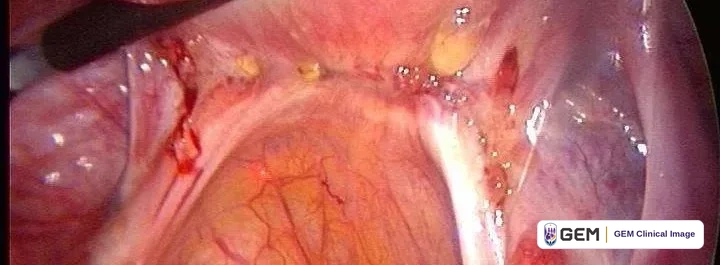
FACT: Stage is not a pain scale. Limited visible disease may cause severe symptoms, while extensive disease may cause less pain. Treatment should reflect symptoms and priorities.
6. MYTH: Endometriosis always causes infertility
FACT: Many affected people conceive naturally; others benefit from fertility care. Options include intrauterine insemination (IUI), in vitro fertilization (IVF) or selected surgery.
7. MYTH: Pregnancy cures endometriosis
FACT: Pregnancy can change symptoms, but is not a cure and should not be prescribed to treat endometriosis.
8. MYTH: Hysterectomy always cures it
FACT: Hysterectomy removes the uterus and prevents carrying a pregnancy. It does not automatically remove endometriosis elsewhere or cure every cause of pain.
9. MYTH: Menopause always ends it
FACT: Symptoms may improve after menopause, but endometriosis can persist. New or persistent symptoms still need assessment.
10. MYTH: Everyone needs surgery
FACT: Surgery helps selected patients. Others can be assessed and treated without an operation. The choice depends on symptoms, goals, risks and preferences.
11. MYTH: Laparoscopy only finds disease
FACT: When indicated, laparoscopy can diagnose and treat disease within informed consent and safe limits. Complex treatment may be staged. Clinical diagnosis and treatment do not always require surgery.
12. MYTH: Returning pain proves surgery failed
FACT: Residual or recurrent disease is one possibility. Adenomyosis, pelvic-floor, bowel or bladder problems and nerve-related pain may also contribute. Reassessment matters.
13. MYTH: Endometriosis is cancer
FACT: Endometriosis is not cancer. Risk of certain ovarian cancers is increased, but absolute risk remains low; most affected patients do not develop ovarian cancer.
Extra routine cancer screening or preventive surgery is not recommended solely because of endometriosis. Suspicious findings, strong family history or inherited risk require individual assessment.
Evidence & review
Endometriosis: Myths and Facts
Version 1.1 · Reviewed 13 September 2026
Symptoms and diagnosis
Severe disruptive period pain deserves assessment, including in adolescence. Normal ultrasound or MRI does not rule out superficial endometriosis. Clinical diagnosis and treatment can proceed without mandatory laparoscopy. Laparoscopy can be considered when imaging is negative and empirical treatment is unsuccessful or inappropriate, using shared decision-making.
Treatment, fertility and recurrent symptoms
Hormonal symptom relief does not establish that every lesion has disappeared. Pregnancy and hysterectomy are not guaranteed cures. Endometriosis may persist after menopause. Fertility and treatment decisions are individual, and pain returning after surgery can have more than one cause.
GEM surgical-documentation position
When surgery is appropriate, GEM supports safe inspection, mapping, consented treatment, pathology where appropriate and useful operative records. Preserve the complete unedited video when feasible, with consent and privacy safeguards. This is a GEM quality-of-care position, not a universal legal obligation or a requirement that every patient have surgery. Complex treatment may need a planned later operation.
Cancer risk in context
Endometriosis is not cancer. Risk is increased for some ovarian-cancer types, but the absolute risk remains low and most affected patients do not develop ovarian cancer. The original mixed 1.9% and below 2-5% wording is removed because it combined estimates without a clear population or method. Extra routine cancer screening or preventive surgery is not recommended solely because of endometriosis. A suspicious mass, strong family history or inherited risk warrants individualized evaluation.
The 2026 review and its correction
Bogani and colleagues published the cited 2026 review. Its subsequent corrigendum corrects an affiliation and three references; it does not announce revised risk estimates or a retraction. The review abstract and the complete corrigendum were inspected; the full original review was not.
Medical information
Seek urgent or emergency assessment for severe or rapidly worsening symptoms.
Version 1.1 · Reviewed 13 September 2026. Proposed next review: September 2027, or sooner if relevant guidance changes.
Full references
Numbers correspond to the sources cited in this revised guide. Access notes distinguish relevant full-text inspection from abstract-only checks. No source is presented as an endorsement of GEM.
- [1] ESHRE. Endometriosis guideline. 2022.
Verification: Relevant full-guideline sections inspected online.
Freely available — https://www.eshre.eu/-/media/sitecore-files/Guidelines/Endometriosis/ESHRE-GUIDELINE-ENDOMETRIOSIS-2022_1.pdf - [2] WHO. Endometriosis. Fact sheet, 15 October 2025.
Verification: Relevant full fact sheet inspected.
Freely available — https://www.who.int/news-room/fact-sheets/detail/endometriosis - [3] Bogani G, Moore KN, Ray-Coquard I, et al. Endometriosis and ovarian cancer risk. Gynecol Oncol. 2026;209:88-98. doi:10.1016/j.ygyno.2026.05.004. PMID 42119308.
Verification: Bibliographic record and complete abstract inspected via PubMed/Europe PMC; full paper not inspected.
Freely available — https://pubmed.ncbi.nlm.nih.gov/42119308/ - [4] Bogani G, et al. Corrigendum to Endometriosis and ovarian cancer risk. Gynecol Oncol. 2026;210:113. doi:10.1016/j.ygyno.2026.05.029. PMID 42229041.
Verification: Complete one-page publisher correction inspected in author institutional repository.
Freely available — https://lirias.kuleuven.be/retrieve/ad3ad945-c3d8-4b4e-a1e0-0eae367e7c48
This material is for educational purposes only and does not constitute medical advice or create a clinician-patient relationship with GEM.
© 2026 Global Endometriosis Movement. All rights reserved.