

Understanding Treatment
There is no single treatment for every patient
Endometriosis treatment should be individualized. The best plan depends on the patient's symptoms, age, goals, disease location and extent, previous treatment, fertility plans, side effects and personal preferences. Medical treatment may control symptoms, surgery may be appropriate for selected patients, and some patients need both at different times. Shared decision-making is essential.
Pain medications
Nonsteroidal anti-inflammatory drugs (NSAIDs) may ease menstrual or pelvic pain. They do not remove lesions. Choice and dose should account for stomach, kidney, bleeding and other medication risks; ask your clinician or pharmacist what is suitable for you.
Birth-control pills
Combined hormonal contraceptives can reduce endometriosis-associated menstrual pain, non-menstrual pelvic pain and pain with intercourse. Continuous use may reduce or eliminate menstrual bleeding for some patients. These medicines suppress symptoms while they are being used; they do not surgically remove endometriotic lesions.
Progestins
Progestin-based treatments are another important option for controlling endometriosis-associated pain. They may be given as tablets, injections, an implant or a levonorgestrel-releasing intrauterine system. Choice should consider effectiveness, side effects, bleeding pattern, contraception needs and patient preference.
GnRH agonists and antagonists
Gonadotropin-releasing hormone (GnRH) agonists and antagonists can reduce endometriosis-associated pain by lowering ovarian estrogen. They are usually considered when other hormonal options have been ineffective or unsuitable.
Possible effects include hot flashes, night sweats, vaginal dryness and loss of bone mineral density. Add-back hormones can reduce some effects but do not eliminate every risk. The need for add-back, treatment duration and bone-health monitoring depend on the specific medicine and the patient.
When surgery should be considered
Surgery should be considered when symptoms remain significant despite appropriate medical treatment, medication is ineffective or unacceptable, an ovarian endometrioma or deep disease requires surgical management, organ function is threatened, anatomy is significantly distorted, or the patient's individual circumstances and goals favor operative treatment.
Prompt specialist assessment matters when disease may threaten an organ or symptoms persist despite treatment. Early referral can improve planning, but current evidence does not prove that operating early prevents progression in every patient.
GEM favors removal of visible disease when surgery is justified, safe and fully consented. This is a GEM surgical preference; it is not a universal requirement for cancer-style clear margins. The procedure must balance likely benefit, complications, organ function and fertility.
Excision and other surgical approaches
GEM position: plan therapeutic laparoscopy with an appropriately experienced surgeon. Assess safely accessible pelvic and abdominal surfaces and document disease and any limits of assessment. Excision may be considered over ablation for pain, but technique depends on disease type, anatomy, safety and expertise.
Treatment may need to be staged if consent, unexpected findings or safety limits prevent the planned procedure. GEM supports complete unedited video when feasible, consented and consistent with privacy requirements.
Ovarian endometrioma
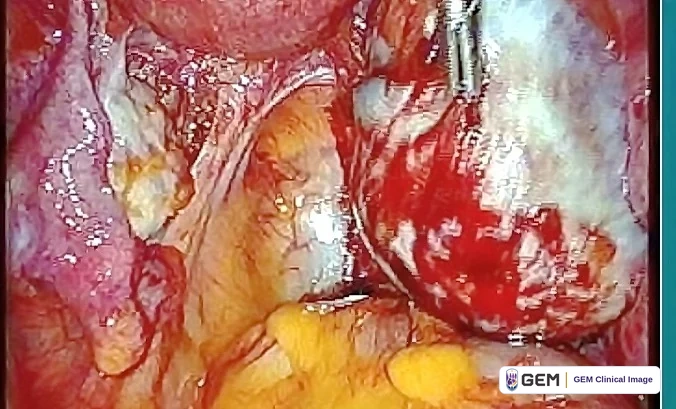
An ovarian endometrioma needs an individualized plan. Fertility goals and ovarian reserve matter. Anti-Mullerian hormone (AMH), ultrasound and other clinical information can help estimate egg quantity; AMH does not measure egg quality or reliably predict natural pregnancy.
Management should not be based on a rigid size cutoff alone. The traditional 4-cm threshold should not be interpreted to mean that every endometrioma smaller than 4 cm should simply be observed or that every endometrioma larger than 4 cm must be operated on. Symptoms, age, fertility plans, ovarian reserve, previous ovarian surgery, cyst characteristics, bilaterality and the experience of the treating center should all influence the decision.
GEM supports timely referral to an expert center. If surgery is chosen, discuss treatment benefit alongside the risk of losing healthy ovarian tissue. Cystectomy reduces recurrence more than drainage and coagulation, but surgery can lower ovarian reserve. Experienced, careful technique reduces avoidable injury; it cannot eliminate this risk.
Deep endometriosis
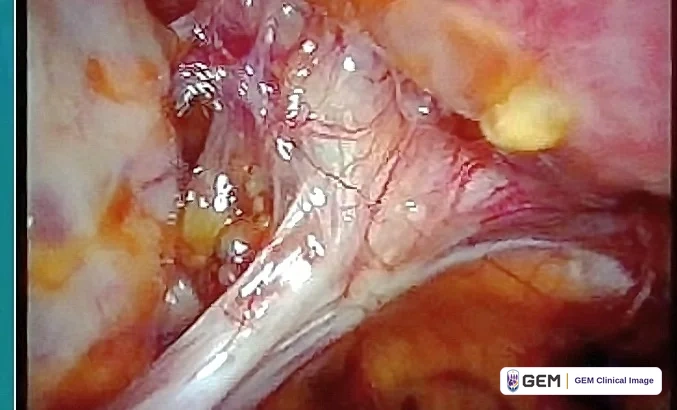
Deep endometriosis may involve the bowel, bladder, ureter, vagina, pelvic sidewall, nerves, diaphragm or other structures. Treatment should be planned in a center or by a team with appropriate expertise. When organ involvement is suspected, preoperative mapping and multidisciplinary preparation may be necessary so that disease can be treated safely and comprehensively during the planned operation.
Recurrent disease
Persistent pain can reflect residual or recurrent disease, but also pelvic-floor, nerve, bowel, bladder or other problems.
Recurrence can occur after apparently complete surgery; it does not by itself prove poor surgery.
For people not seeking pregnancy immediately, postoperative hormonal suppression can lower recurrence risk. Hormones suppress activity and symptoms; they do not surgically excise remaining lesions.
A repeat operation needs an individualized reason, realistic goals and discussion of alternatives, complications and fertility. Previous dissection, scarring and distorted anatomy may make surgery more difficult. Complex recurrent disease may need an experienced multidisciplinary team.
Treatment when fertility is desired
When pregnancy is desired, balance pain, age, ovarian reserve, tubal and partner factors, and chances of natural conception or assisted reproduction. Hormonal suppression should not be prescribed solely to improve spontaneous pregnancy; hormones used within fertility-treatment protocols are a separate issue. Surgery before in vitro fertilization (IVF) is individualized. Routine endometrioma surgery to improve IVF live birth is not recommended and can harm ovarian reserve.
Multidisciplinary care
Complex endometriosis is often best managed by a coordinated team. Depending on the patient's needs, this may include an endometriosis gynecologic surgeon, reproductive endocrinology and infertility specialist, colorectal surgeon, urologist, thoracic surgeon, radiologist, pelvic-floor physical therapist, pain specialist and other professionals. The goal is one coordinated treatment plan centered on the patient's priorities.
Evidence & references
Understanding Treatment
Version 1.1 · Reviewed 13 September 2026
Medical and surgical treatment
Analgesia and hormonal treatments can help pain; tolerability and contraindications matter. GnRH treatment duration, add-back and monitoring are medicine-specific. Surgery is an option based on symptoms, anatomy, organ risk and preferences.
Ovaries, fertility and recurrence
Ovarian surgery can reduce reserve even in expert hands. AMH primarily reflects egg quantity. Routine endometrioma surgery to improve IVF outcomes is not supported. Postoperative hormones can lower recurrence when pregnancy is not immediately desired.
GEM preference
Comprehensive assessment, safe excision and complete video remain stated GEM preferences. A cancer-style clear-margin requirement and a promise that early surgery prevents progression have been removed.
Full references
- [S01] ESHRE. Endometriosis guideline. 2022. Freely available
- [S13] WHO. Endometriosis. Fact sheet, 15 October 2025. Freely available
- [S06] Zakhari A, Delpero E, McKeown S, et al. Endometriosis recurrence following post-operative hormonal suppression: a systematic review and meta-analysis. Hum Reprod Update. 2021;27(1):96-107. doi:10.1093/humupd/dmaa033. PMID 33020832. Freely available
- [S11] Working group of ESGE, ESHRE and WES, Saridogan E, et al. Recommendations for the Surgical Treatment of Endometriosis. Part 1: Ovarian Endometrioma. Hum Reprod Open. 2017;2017(4):hox016. doi:10.1093/hropen/hox016. PMID 31486802. Freely available
- [S12] Working group of ESGE, ESHRE, and WES, et al. Recommendations for the surgical treatment of endometriosis. Part 2: deep endometriosis. Hum Reprod Open. 2020;2020(1):hoaa002. doi:10.1093/hropen/hoaa002. PMID 32064361. Freely available
- [S28] Practice Committee of ASRM. Testing and interpreting measures of ovarian reserve: a committee opinion. Fertil Steril. 2020;114(6):1151-1157. doi:10.1016/j.fertnstert.2020.09.134. Freely available
No listed institution endorses GEM.
Medical information
Do not delay care; seek emergency help for a suspected emergency.
This material is for educational purposes only and does not constitute medical advice or create a clinician-patient relationship with GEM.
© 2026 Global Endometriosis Movement. All rights reserved.