

Pain, Intimacy, Relationships & Emotional Health
Endometriosis can affect much more than the pelvis.
Pain with sex is a real endometriosis symptom
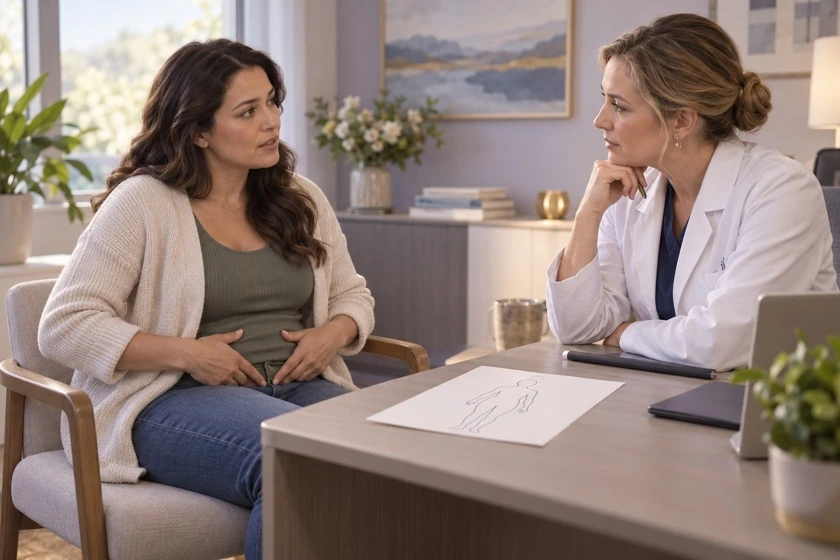
Endometriosis can cause deep pain during or after sex. Pain at the vaginal opening may have other or additional causes, including pelvic-floor tension, vulvar pain or dryness. Tell your clinician where it hurts. You should not feel obliged to continue an activity that causes pain.
Pain can change intimacy

When a person expects sex to hurt, it is natural to avoid it or become tense. Desire may decrease. A partner may misunderstand the avoidance as rejection. Over time, pain can affect closeness, confidence and the relationship itself.
Pain can strain intimacy; avoiding painful sex does not necessarily mean a lack of love or commitment.
What can help?

Tell your doctor where the pain occurs and whether it happens during penetration, with deeper penetration, or afterward. Treatment should look for the cause – including active endometriosis, pelvic-floor muscle problems, vaginal dryness or other pelvic conditions.
Depending on the cause, help may include treatment of endometriosis, pelvic-floor physical therapy, lubricant, changing positions or depth of penetration, and sexual-health counseling. Intimacy does not have to depend on painful intercourse.
Talking with your partner
Clear communication can reduce fear and misunderstanding. Explain what hurts, what does not hurt, and what feels comfortable. A supportive partner should never pressure you to continue an activity that causes pain. Couples can explore other ways of maintaining affection, pleasure and closeness while treatment is underway.
Endometriosis Can Affect Emotional Health
Chronic pain, fatigue, infertility, repeated medical visits and uncertainty can be emotionally exhausting.
Anxiety, low mood & isolation

Some people with endometriosis experience anxiety, depression, frustration, loss of confidence or social isolation. These feelings can be consequences of living with chronic disease and pain. They do not mean that the physical symptoms are imaginary.
When pain and emotions affect each other
Pain can worsen sleep, stress and mood. In turn, poor sleep, fear and ongoing stress can make pain harder to cope with. Supporting emotional health is therefore part of good endometriosis care – not a substitute for investigating and treating the physical disease.
Ask for support

Support may come from family, friends, patient groups, counseling, pain-focused psychological therapy, sexual-health counseling or couples counseling. The goal is to help you cope, communicate, restore function and protect your quality of life while the medical causes of symptoms are also addressed.
Questions to ask

- Could endometriosis or another pelvic condition be causing my pain during sex?
- Could pelvic-floor physical therapy help me?
- What can I do to make intimacy more comfortable?
- Could my treatment or medications be affecting sexual desire or comfort?
- Where can I get help if pain is affecting my mood, relationship or quality of life?
Evidence & references
Pain, Intimacy, Relationships & Emotional Health
Version 1.2 · September 2026
Sexual and emotional health
Deep pain can occur with endometriosis. Entry pain can involve other causes. Pain, sleep, mood and relationships can interact; this does not make physical symptoms imaginary. Support is complementary to assessment and treatment.
Individual support
Pelvic-floor therapy, counseling and other support are options matched to assessed needs. The cited 2025 S2k guideline was published in 2026; its abstract and publication identity were inspected, not the unavailable full English text.
Full references
- [S13] WHO. Endometriosis. Fact sheet, 15 October 2025. Freely available
- [S01] ESHRE. Endometriosis guideline. 2022. Freely available
- [R41684533] Burghaus S, Schäfer SD, Bär KJ et al. Diagnosis and Therapy of Endometriosis. Guideline of the DGGG, OEGGG and SGGG (S2k-Level, AWMF Registry No. 015/045, April 2025). Geburtshilfe Frauenheilkd. 2026;86(2):133-188. doi:10.1055/a-2760-4867. PMID 41684533. Freely available
No listed institution endorses GEM.
Medical information
Do not delay care; seek emergency help for a suspected emergency.
This material is for educational purposes only and does not constitute medical advice or create a clinician-patient relationship with GEM.
© 2026 Global Endometriosis Movement. All rights reserved.