

Understanding Endometriosis Surgery
Choosing the right operation, surgeon, documentation and long-term plan
1. When do I actually need surgery?

Not every patient with endometriosis needs surgery. The decision should consider symptoms, imaging, disease location, organ involvement, fertility goals, response or tolerance to medical treatment, and patient preference. When significant disease is suspected, GEM supports early expert surgical evaluation rather than allowing symptom suppression to become loss of appropriate follow-up.
2. How should I choose my surgeon?

Ask specifically about the surgeon's endometriosis volume and experience with endometrioma, deep disease and multi-organ involvement. Complex disease may require an endometriosis center and a multidisciplinary team.
3. What is a MIGS/endometriosis specialist?
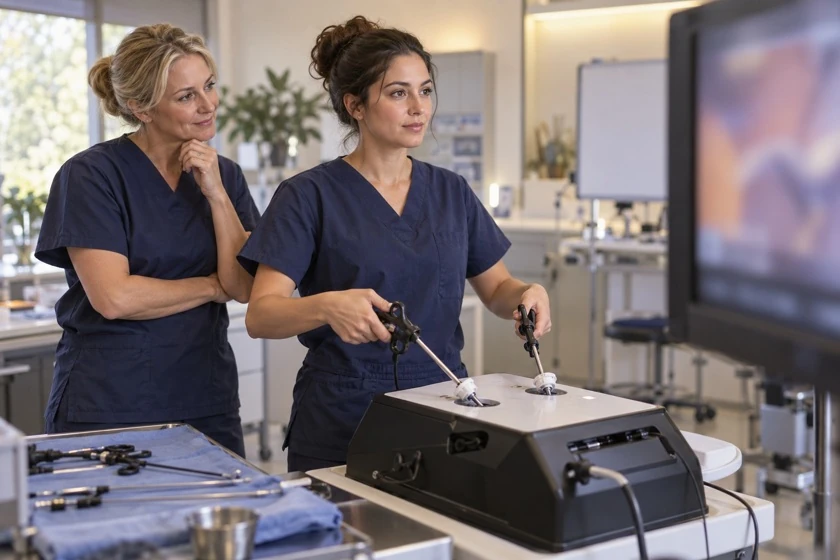
MIGS means Minimally Invasive Gynecologic Surgery. Advanced minimally invasive training is valuable, but MIGS training alone does not automatically establish expertise in every form of endometriosis. Ask about specific endometriosis experience.
4. What should happen before surgery?

Review symptoms, examination, imaging, previous surgery and fertility goals before operating. Discuss benefits, alternatives, complications and limits of consent, including any possibility of staged treatment. Suspected bowel, bladder or ureteral disease may require other specialists.
5. Operative report, mapping and pathology

The report should describe disease location and extent, adhesions, distorted anatomy, organs involved, what was resected, what remained and why, specimens sent to pathology, and complications. Disease mapping and pathology strengthen continuity of care.
6. Photography and video documentation

GEM supports comprehensive photographic documentation and, with informed consent and appropriate privacy safeguards, preservation of the complete unedited operative video whenever feasible.
7. Why might disease or symptoms recur?
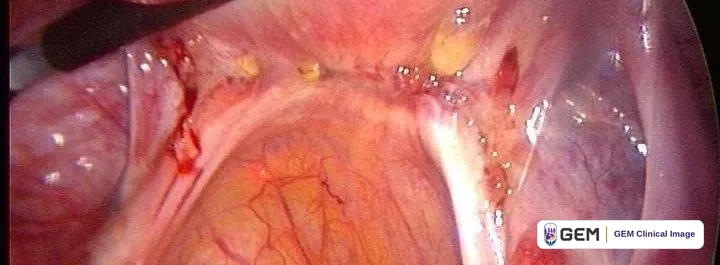

Endometriosis is chronic. Residual or microscopic disease may contribute to recurrence, but recurrence can also occur after apparently comprehensive surgery. Persistent symptoms may also have other causes. Reassessment should precede automatic repeat surgery.
8. When should I seek a second opinion?

Consider a second opinion before major or repeat surgery, when anatomy is complex, when bowel/bladder/ureter involvement is suspected, when fertility consequences are important, or when the proposed plan does not clearly explain what will be done.

Surgery is one option. Choice of procedure and expected benefit vary with the disease and the patient. GEM's preference for comprehensive assessment and complete unedited video is an advocacy position.
Evidence & references
Understanding Endometriosis Surgery
Version 1.2 · September 2026
Planning and realistic goals
Surgery is not needed for every patient. Discuss benefits, alternatives, complications, fertility and limits of consent. Complexity may require other specialties or staged treatment. Recurrence does not alone prove inadequate surgery.
Documentation preference
GEM advocates detailed mapping, pathology when appropriate and complete unedited video when feasible and consented. No universal legal obligation or guarantee of complete lesion detection is asserted.
Full references
- [S01] ESHRE. Endometriosis guideline. 2022. Freely available
- [S12] Working group of ESGE, ESHRE, and WES, et al. Recommendations for the surgical treatment of endometriosis. Part 2: deep endometriosis. Hum Reprod Open. 2020;2020(1):hoaa002. doi:10.1093/hropen/hoaa002. PMID 32064361. Freely available
- [S06] Zakhari A, Delpero E, McKeown S, et al. Endometriosis recurrence following post-operative hormonal suppression: a systematic review and meta-analysis. Hum Reprod Update. 2021;27(1):96-107. doi:10.1093/humupd/dmaa033. PMID 33020832. Freely available
No listed institution endorses GEM.
Medical information
Do not delay care; seek emergency help for a suspected emergency.
This material is for educational purposes only and does not constitute medical advice or create a clinician-patient relationship with GEM.
© 2026 Global Endometriosis Movement. All rights reserved.