

Understanding Your Endometriosis Report
How to understand the stage, type, location, pathology and surgical documentation of your disease
Your report records what was found and what was done. A stage number alone is not enough. Ask where disease was seen, which organs were involved, what was treated, what pathology showed and whether any disease remained.
1. Start with the whole report
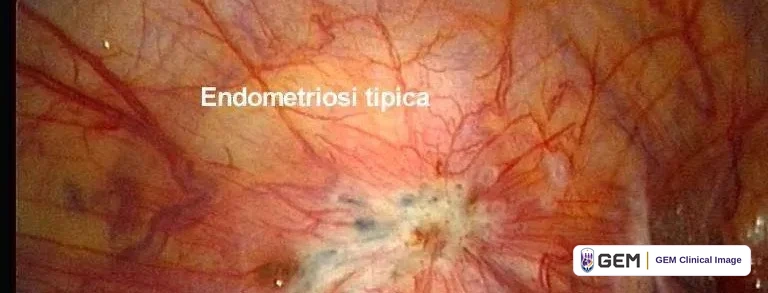
An endometriosis report should tell more than whether disease was simply 'present' or 'absent.' Look for the type, location and extent of disease, organs involved, adhesions or distorted anatomy, what was treated, what remained, specimens sent to pathology, and any complications. The operative report, pathology and imaging should be read together.
2. What does Stage I-IV mean?
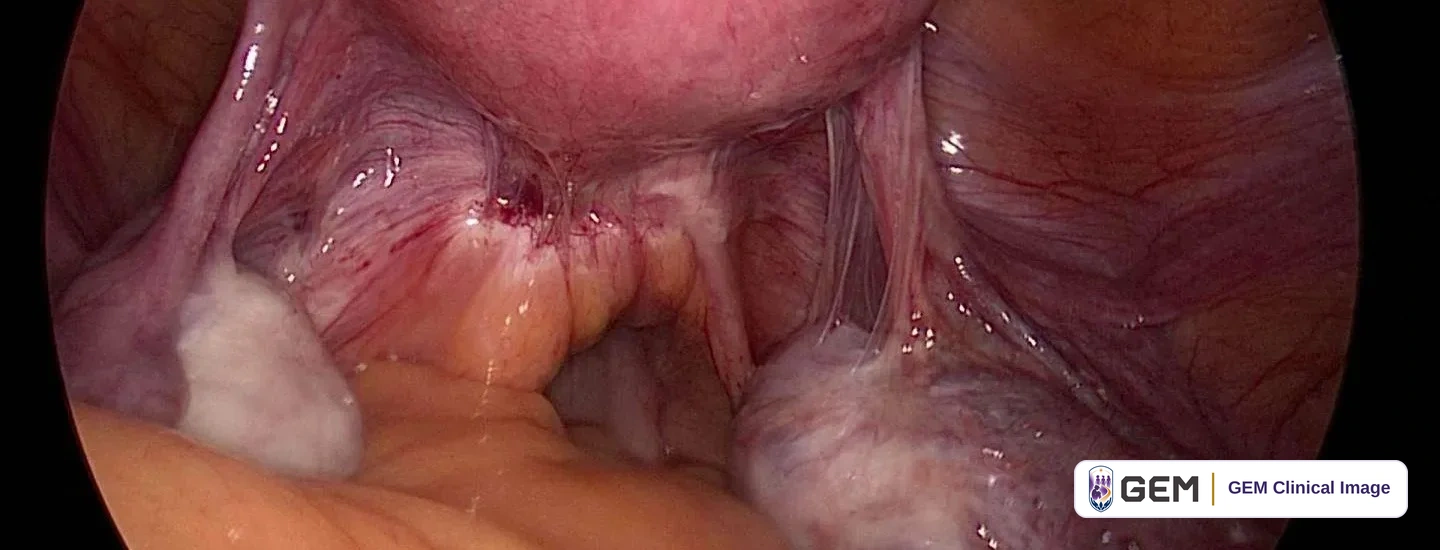
The revised American Society for Reproductive Medicine (rASRM) system assigns points for visible peritoneal and ovarian disease and adhesions, producing Stage I (minimal), II (mild), III (moderate) or IV (severe). It is widely used, but it has important limitations. A higher stage does not reliably mean more pain, and a lower stage does not mean the disease is unimportant.
3. Type and location may matter more than the stage
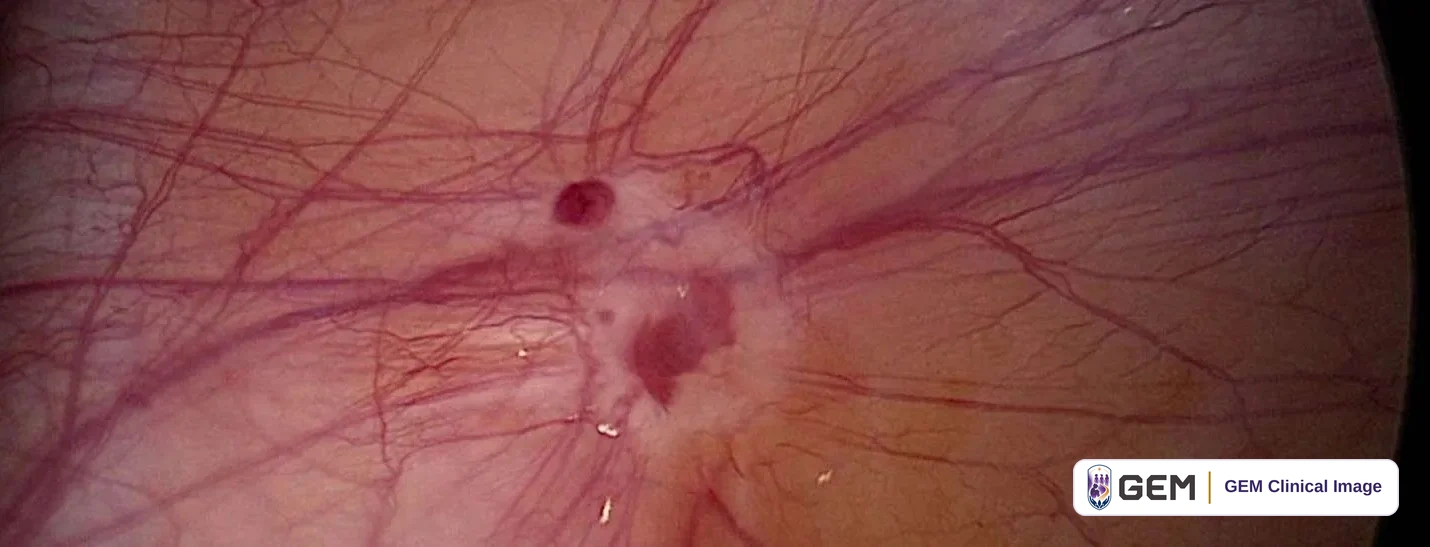
Ask where the disease was found and what form it took. Endometriosis may be superficial peritoneal disease, ovarian endometrioma or deep endometriosis. Disease involving the bowel, bladder, ureter, diaphragm, pelvic nerves or other structures may have major clinical importance even when a single stage number does not describe that complexity well.
4. Superficial peritoneal endometriosis
These lesions are located on the surface of the pelvic or abdominal lining and can have many appearances, including red, clear, white, brown or black lesions. Superficial disease may be subtle and can be missed if the examination is incomplete. Small visible lesions can still be associated with substantial symptoms.
5. Ovarian endometrioma
An endometrioma is endometriosis involving the ovary, commonly forming a cyst containing old blood. Your report should identify the side, size, whether one or both ovaries are involved, the procedure performed, and the condition of the remaining ovary. This information can be important for recurrence risk, ovarian reserve and future fertility planning.
6. Deep endometriosis
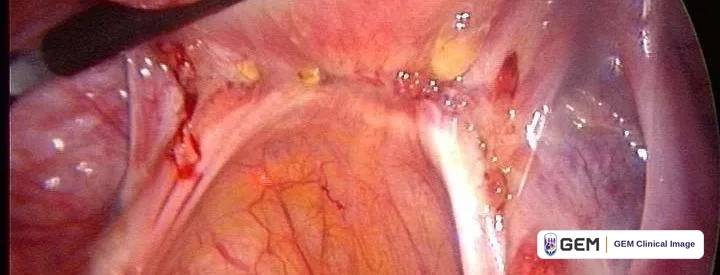
Deep disease extends beneath the tissue surface and may involve structures such as the uterosacral ligaments, vagina, rectum or other bowel, bladder and ureters. The report should describe exact anatomical locations and organ involvement, not merely say 'deep endometriosis.' Complex disease may require multidisciplinary treatment.
7. Adhesions, fibrosis and distorted anatomy
Adhesions are scar-like bands that can attach organs. Reports may describe fibrosis, a frozen pelvis or a closed pouch behind the uterus. These findings may affect symptoms and surgical complexity. Adhesions can result from endometriosis, previous surgery, infection or other inflammation.
8. What is #Enzian?
#Enzian is a detailed system designed to describe the anatomical location and extent of endometriosis, including deep disease and several sites that are not well represented by rASRM staging. If your report contains letters and numbers from #Enzian, ask your surgeon to translate them into ordinary language and show you exactly where the disease was located.
9. What does the pathology report tell you?
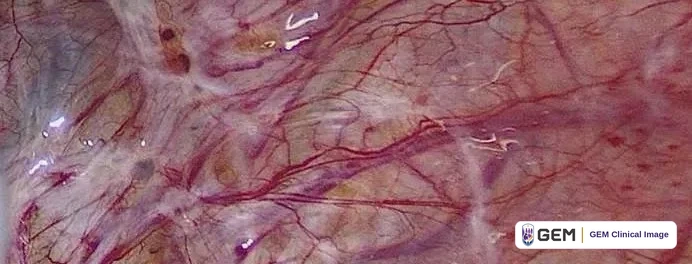
Pathology examines removed tissue. It may confirm endometriosis, but a negative sample does not exclude disease at every site. The result must be interpreted with symptoms, imaging and operative findings. A photograph or visual impression alone is not histological confirmation.
10. Was all visible disease treated?
Your report should clearly state what was excised, ablated or otherwise treated and whether any visible or suspected disease remained. If disease was intentionally left behind, the reason should be documented – for example, safety, limits of consent, unexpected organ involvement or the need for another specialist. GEM believes this information is essential for continuity of care.
11. Photographs, mapping and operative video
Photographs, mapping and an operative report can support future care. GEM additionally favors retention of the complete unedited operative video when feasible and consistent with consent and privacy requirements. Ask what documentation exists and how to obtain a copy.
12. Questions to ask when reviewing your report
Ask: Where exactly was my endometriosis? What type was it? What does my stage or #Enzian description mean? Were my ovaries, bowel, bladder, ureters or diaphragm involved? Was all visible disease treated? What did pathology show? Were photographs or video recorded? Is any disease believed to remain? What does this mean for pain, fertility, recurrence and follow-up?
Evidence & references
Understanding Your Endometriosis Report
Version 1.1 · Reviewed 13 September 2026
Report terminology
rASRM stage I-IV is an anatomical scoring system with limited correlation to symptoms and limited description of deep disease. #Enzian describes more anatomical compartments and can be applied to imaging or surgery.
Pathology and documentation
A negative sample does not exclude all disease; photo appearance alone does not prove histology. Scar tissue may have several causes. GEM's video preference is distinct from record-access law.
Full references
- [S01] ESHRE. Endometriosis guideline. 2022. Freely available
- [R34693033] International Working Group of AAGL, ESGE, ESHRE and WES et al. An international terminology for endometriosis, 2021. Hum Reprod Open. 2021;2021(4):hoab029. doi:10.1093/hropen/hoab029. PMID 34693033. Freely available
- [R33483970] Keckstein J, Saridogan E, Ulrich UA et al. The #Enzian classification: A comprehensive non-invasive and surgical description system for endometriosis. Acta Obstet Gynecol Scand. 2021;100(7):1165-1175. doi:10.1111/aogs.14099. PMID 33483970. Freely available
- [S12] Working group of ESGE, ESHRE, and WES, et al. Recommendations for the surgical treatment of endometriosis. Part 2: deep endometriosis. Hum Reprod Open. 2020;2020(1):hoaa002. doi:10.1093/hropen/hoaa002. PMID 32064361. Freely available
- [S11] Working group of ESGE, ESHRE and WES, Saridogan E, et al. Recommendations for the Surgical Treatment of Endometriosis. Part 1: Ovarian Endometrioma. Hum Reprod Open. 2017;2017(4):hox016. doi:10.1093/hropen/hox016. PMID 31486802. Freely available
- [L4] 45 CFR 164.524. Access of individuals to protected health information. Current eCFR text accessed 13 September 2026. Freely available
No listed institution endorses GEM.
Medical information
Do not delay care; seek emergency help for a suspected emergency.
This material is for educational purposes only and does not constitute medical advice or create a clinician-patient relationship with GEM.
© 2026 Global Endometriosis Movement. All rights reserved.